
Puppy Primer Day Training

Is your pup impacting your productivity at home? Do you just need some peace and quiet? Can’t find the time to train?
Puppy Primer is the answer.
Allow us to train, socialize and exercise your pup so you can enjoy your best friend! Receive training direction and light homework to keep the momentum going at home. Get back your peaceful evenings with drop-off Puppy Primer for dogs under 6 months of age!
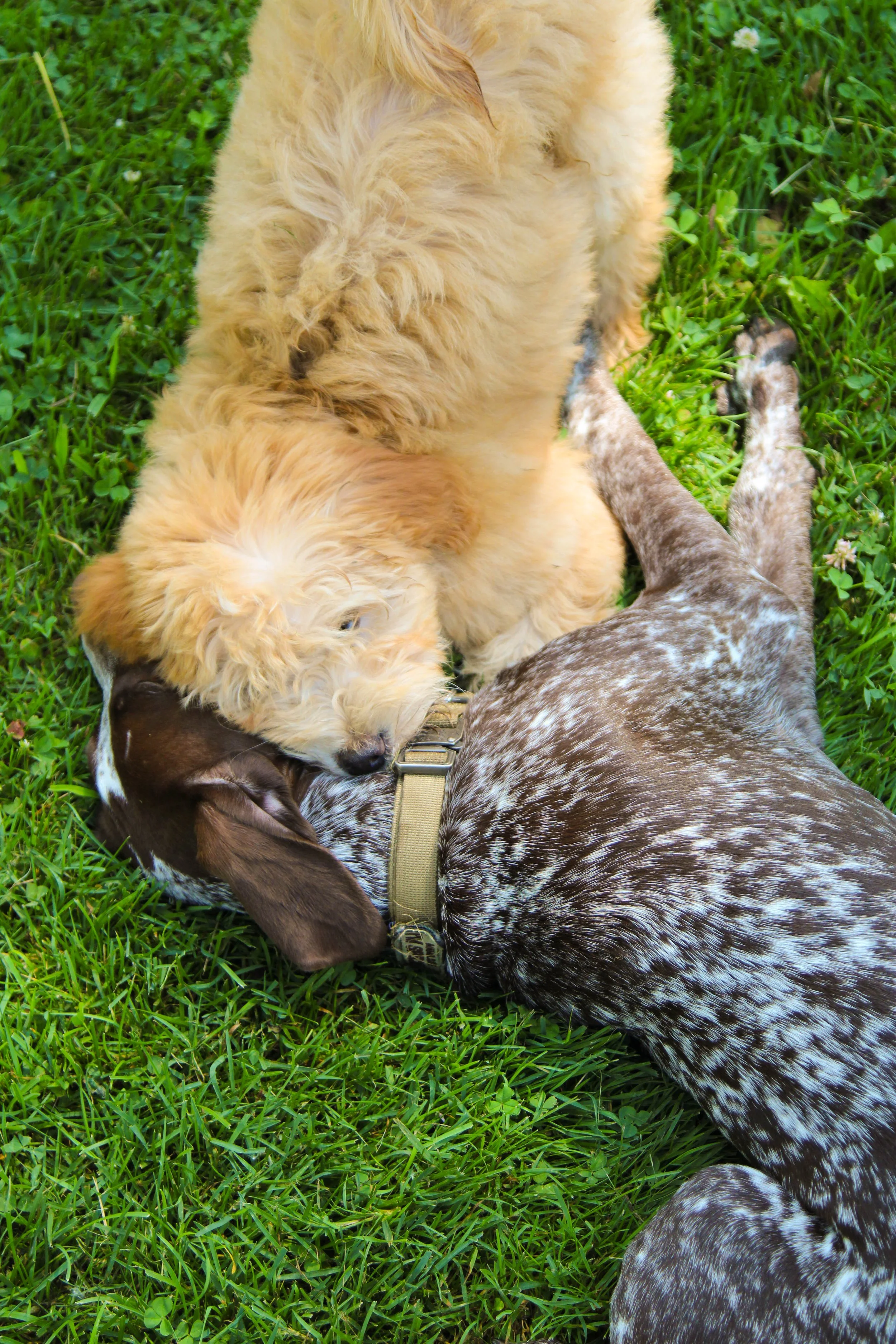
Drop-off Puppy Primer Day Training adds freedom to your schedule and peace of mind to your life.
Each day includes:
30-minutes of one-on-one training.
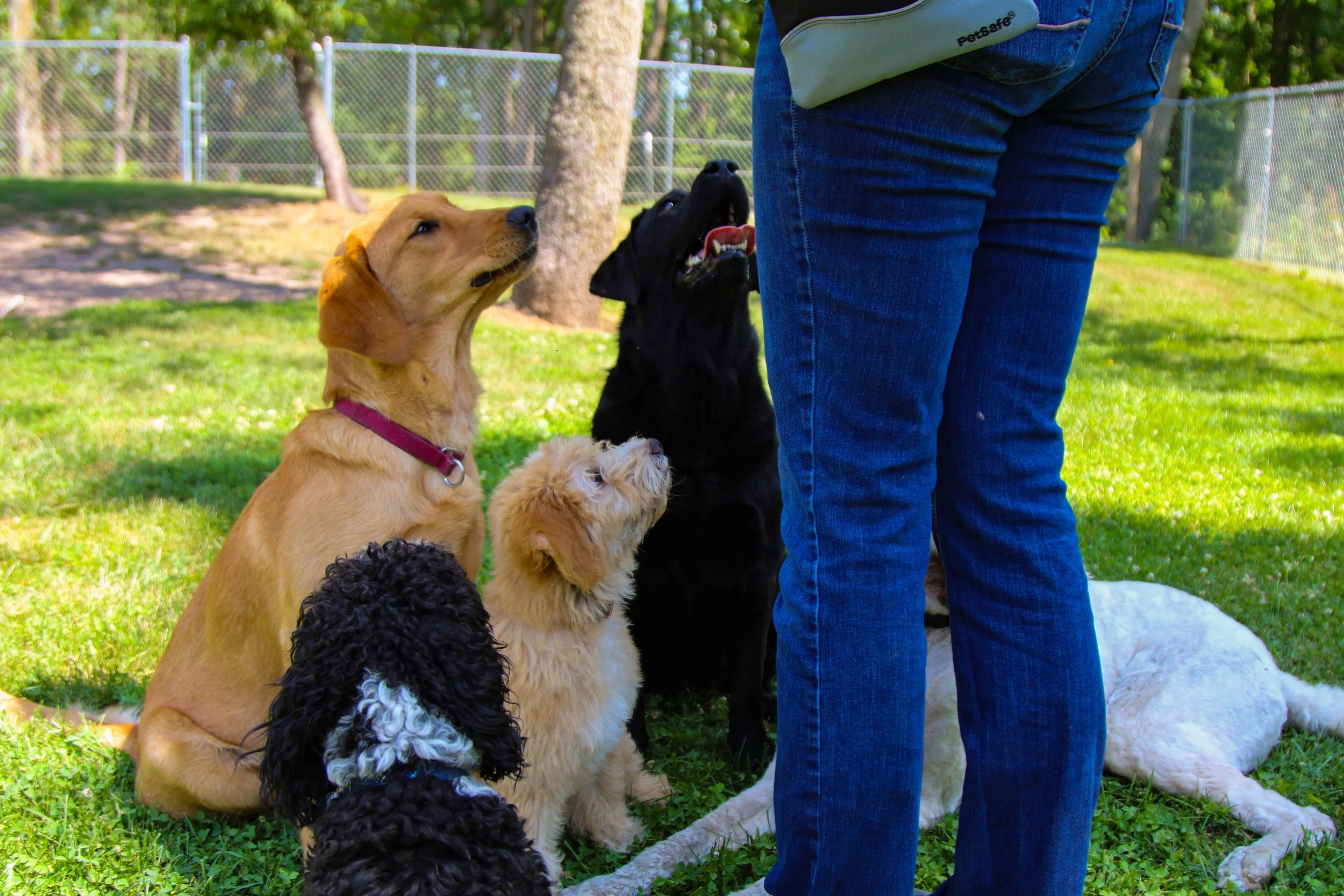
Playtime with puppies and puppy-safe ambassador dogs.
Group training time among dog distractions.
Structured settle time.
Enrichment activities like exploring new sights, surfaces, smells and objects.
Your pup will play and interact with puppies of all breeds as well as safe adult dogs. These supervised interactions build polite social skills and confidence.
We customize our training to fit your needs!
Training includes sit, down, stay, leash walking, come, bed. Behaviors are taught at age-appropriate levels with clear expectations and homework each week. We will customized your pup’s training based on their age and requested skills. Focus can range from self-control skills (leave it, no jumping, no biting, etc) to polite greetings to teaching fetch. No question is too big, we love a good training challenge!
What sets Puppy Primer apart?
Customized training to fit your needs!
Need your pup to be gentle with kids?
Want your pup to play fetch?
No questions are off limits, we love a good training challenge!
Structured play sessions are supervised by a certified trainer.
Play groups are organized based on size, energy level and temperament.
Your pup will learn how to play appropriately with other dogs of varying breeds as well as learning how to defuse conflict without resorting to aggression.
Because we specialize in puppies under six months, we’re able to focus on socialization skills important to their development and confidence.
Our goal is to develop life skills through activities and socialization, not create an athlete through over exercising. You can expect your pup to come home pleasantly tired, but not exhausted and cranky.
Rates
Puppy Primer: $450 (6-session package)
Package includes 6 sessions booked 2 days/week for 3 consecutive weeks.
Located in Alto at 84th Street and Morse Lake Ave SE
Playcare Only: $36/day
Puppy graduate or group class enrollee looking for continued socialization? Book Puppy Playcare to keep your pup on track.
Includes group play sessions to maintain socialization and group training (recall from play, group sits, group downs, kennel on cue)
Are you ready for a video overload of puppy joy and cuteness?
Puppy Primer FAQ
How old does my puppy have to be to begin?
Puppies must meet these three requirements:
Lived in your home, illness free, for at least 10 days
Two (2) distemper vaccines administered 3-4 weeks apart (first often given by breeder)
Fecal analysis submitted to vet (either negative or finished treatment)
As long as these requirements are met, your pup can begin as young as 9 weeks old. Once your pup reaches 5 months old, they’ll graduate with all the social skills needed for dog parks, daycare and 4-footed family gatherings!
Which vaccines does my puppy need before registering?
Puppies need at least 2 Distemper (DHPP or DHLPP) vaccines. The first Distemper is often given by the breeder. The second vaccine will be given by your vet at the first puppy appointment. Puppies require updated vaccines every 3-4 weeks until they are around 16-20 weeks of age. Your vet will set up a schedule to update remaining vaccines based on the age, size and health of your puppy. Bordetella, Influenza, and Rabies vaccines should be given at age appropriate times and as recommended by the vet. For example, the Rabies vaccine cannot be given before 12 weeks of age.
Staying on the vet directed schedule is paramount. Some vets are booked several weeks out so we recommend making all the puppy vaccine appointments as soon as possible to ensure your puppy remains up to date.
Why does my puppy need a fecal analysis?
Even if your pup has already been dewormed, there is no one dewormer that covers everything. Bringing a stool sample to your vet allows them to check for intestinal parasites such as worms, coccidia and giardia.
Some of these intestinal parasites are transferrable to other dogs and some can even be picked up by humans! Yuck! Once your pup has had a negative stool sample or completed treatment, they are welcome to return to Playcare.
Should I wait until my pup is finished with vaccines to begin socialization?
Let’s look at what the experts have to say! The American Veterinary Society of Animal Behavior (vets who specialize in behavior) made the following statement on socialization and vaccines:
The primary and most important time for puppy socialization is the first three months of life. During this time puppies should be exposed to as many new people, animals, stimuli and environments as can be achieved safely. For this reason, the American Veterinary Society of Animal Behavior believes that it should be the standard of care for puppies to receive such socialization before they are fully vaccinated.
Once our dogs reach full vaccination status at 16 weeks, the ideal socialization opportunity has closed. Dogs over 4 months can still be socialized but the process is much slower. The AVSAB also states:
In general, puppies can start puppy socialization classes as early as 7-8 weeks of age. Puppies should receive a minimum of one set of vaccines at least 7 days prior to the first class and a first deworming. They should be kept up-to-date on vaccines throughout the class.
Early socialization both inside and outside the home prevents many behavioral problems. Shelters are filled with dogs with behavioral problems and behavior is their leading cause for euthanasia.
Behavioral problems are the number one cause of relinquishment to shelters. Behavioral issues, not infectious diseases, are the number one cause of death for dogs under three years of age.
Above all else, discuss the risks of disease and your dog’s behavioral health with your veterinarian.
Where can I take my puppy for socialization?
Let’s start with places to avoid. Do NOT take your puppy places where there are potentially unvaccinated or unhealthy dogs. This includes the pet store and dog parks. Again, AVOID dog parks and pet stores until (at the very least) your dog is fully vaccinated.
Your dog can be socialized with other healthy adult dogs that are fully vaccinated and good with puppies. Just like humans, not all adult dogs are keen to puppy antics like ear biting. Behaviors are learned quickly so be careful socializing your pup with unruly dogs - their behaviors may be contagious!
Socializing with friendly neighbors or visiting friends who have a cat or other animals can help your pup gain confidence! Adventures into new rooms in the house such as the laundry room. Once your dog is confident, try some training in the laundry room with the machines on! At-home experiences are just as great as outdoor adventures!
Walking in a new neighborhood or visiting a nearby park can be safe places. Avoid parks with a lot of dog traffic. Encourage your pup to hop on the equipment or walk over a bridge. Make sure you don’t push your pup beyond what they are comfortable with. Confidence is important!
Playcare is a safe environment to socialize your pup. Since all pups are healthy and fully vaccinated, we don’t have to worry about the disease component. Playcare is organized and supervised by trainers. This allows us to shape your dog’s behavior into appropriate play roles and redirect or add training as the dog’s need help.